
What if the key to creativity and innovation isn't asking for more ideas, but creating the conditions for them to emerge?
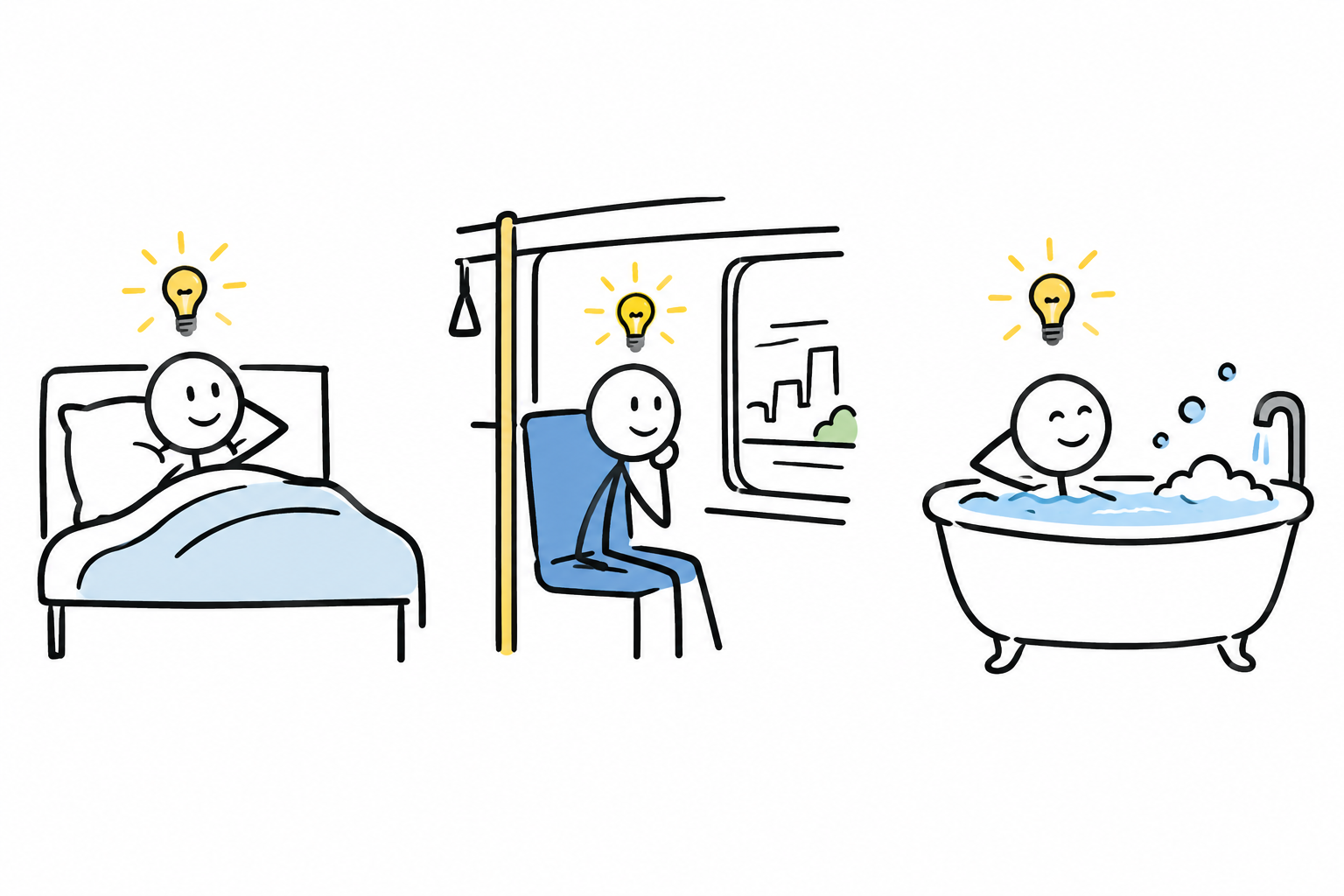
Where do you tend to have your best ideas?
Our best ideas can often come to us in expected moments or places. For many people, it's not sitting at their desk, staring at a blank screen or sitting around a piece of flipchart paper in a breakout group.
It's in quiet moments of solace and space, where our minds have time to wander and explore possibilities without trying to force them – “the bed, the bus, and the bathtub”.
So, if creativity doesn’t always work on demand, what does that mean for how we approach innovation, problem-solving and the development of people?
For me, it starts with creating the right conditions.
The same principle applies to people development. We can’t force someone to have a breakthrough, discover a new perspective or change their practice. But we can shape the experiences, relationships and environments that make those things more likely.
Here are four principles that might be worth considering.
1. Create space, not just sessions
Creativity doesn't always happen when we deliberately sit down to be creative. Sometimes, our best thinking happens when we're walking, travelling, exercising or taking a break from a problem.
Organisations can help by creating space between tasks, allowing time to reflect and resisting the temptation to fill every available gap in the diary with activity.
This doesn't mean that work should stop or that every employee needs a bathtub to find inspiration. It means recognising that constant “doing” isn't always productive, and that stepping away from a problem can sometimes help us return to it with a different perspective.
How often do we create space for a conversation or thinking time that doesn’t have a predetermined outcome?
2. Give ideas room to breathe
An idea rarely arrives fully formed. People need time to explore it, challenge it, connect it to other experiences and decide what it might mean in practice.
When we expect immediate answers, we can unintentionally limit the possibilities people are willing to explore. The first idea shared becomes the starting point, the loudest voice shapes the conversation, and alternatives never get the chance to surface.
The same is true of learning. A single conversation or workshop might spark something, but meaningful development often happens in the reflection and exploration that follows.
It goes without saying that not every idea will be useful, and not every idea needs to become a project - but a little patience can help us move beyond the obvious.
3. Bring different perspectives together
This is where the magic can happen if done purposefully. New thinking often emerges when people encounter ideas, experiences and perspectives different from their own.
Creativity isn't only an individual activity. It can also be social: people building on one another's thinking, questioning assumptions and making connections that neither would have reached alone.
Organisations can encourage this by creating opportunities for people from different teams, disciplines and backgrounds to exchange ideas. The key here is to intentionally create an environment where it is safe to disagree or challenge, ask questions and suggest something that might not work…
4. Make it safe to experiment
Sometimes the biggest barrier isn’t the generation of ideas, but the willingness of people to share their thinking.
Perhaps they're worried about challenging established ways of working or suggesting something that might fail. In environments where “we’ve always done it this way” rules, keeping quiet can feel like the safest option.
Creativity needs a degree of uncertainty. Not every new idea will succeed, and not every new approach will improve things. The important thing is whether people have the confidence and support to try, learn and adapt.
This doesn't mean abandoning accountability. It means treating exploration and innovation as an opportunity to learn, rather than judging every attempt solely by its immediate outcome.
5. Don’t try to manufacture creativity
This is the watchout here. We can design activities intended to encourage creativity, but we shouldn’t confuse running a creative exercise with making people creative.
If people feel pressured to produce an idea on demand, judged for getting it wrong or restricted to a predetermined answer, we may end up stifling the very thing we’re trying to encourage.
When leading or developing others, our role isn’t to dictate when creativity happens or what the outcome should be. It’s to create the conditions for people to explore, experiment and think differently. It means being intentional about the environment we create, while allowing people the freedom to respond in their own way.
So, has anyone got any ideas?
Perhaps this isn’t the best place to start. Instead of asking people to be creative on demand, we might ask ourselves:
Have we created enough space for people to think?
Do we give ideas time to develop?
Are we bringing different perspectives together?
Do people feel safe enough to experiment?
The bed, bus and bathtub remind us that creativity doesn't always happen where, when or how we expect it to.
We can't guarantee that the next breakthrough will arrive during a commute or while we're getting ready for bed, but we can influence the environments we create, the behaviours we encourage and the opportunities people have to explore their thinking.
We spend a lot of time asking people for ideas. Perhaps we should spend a little more time thinking about what helps those ideas emerge because ultimately, whether we're encouraging creativity or developing people, we can't manufacture the outcome - we can only create the conditions for it to happen.
